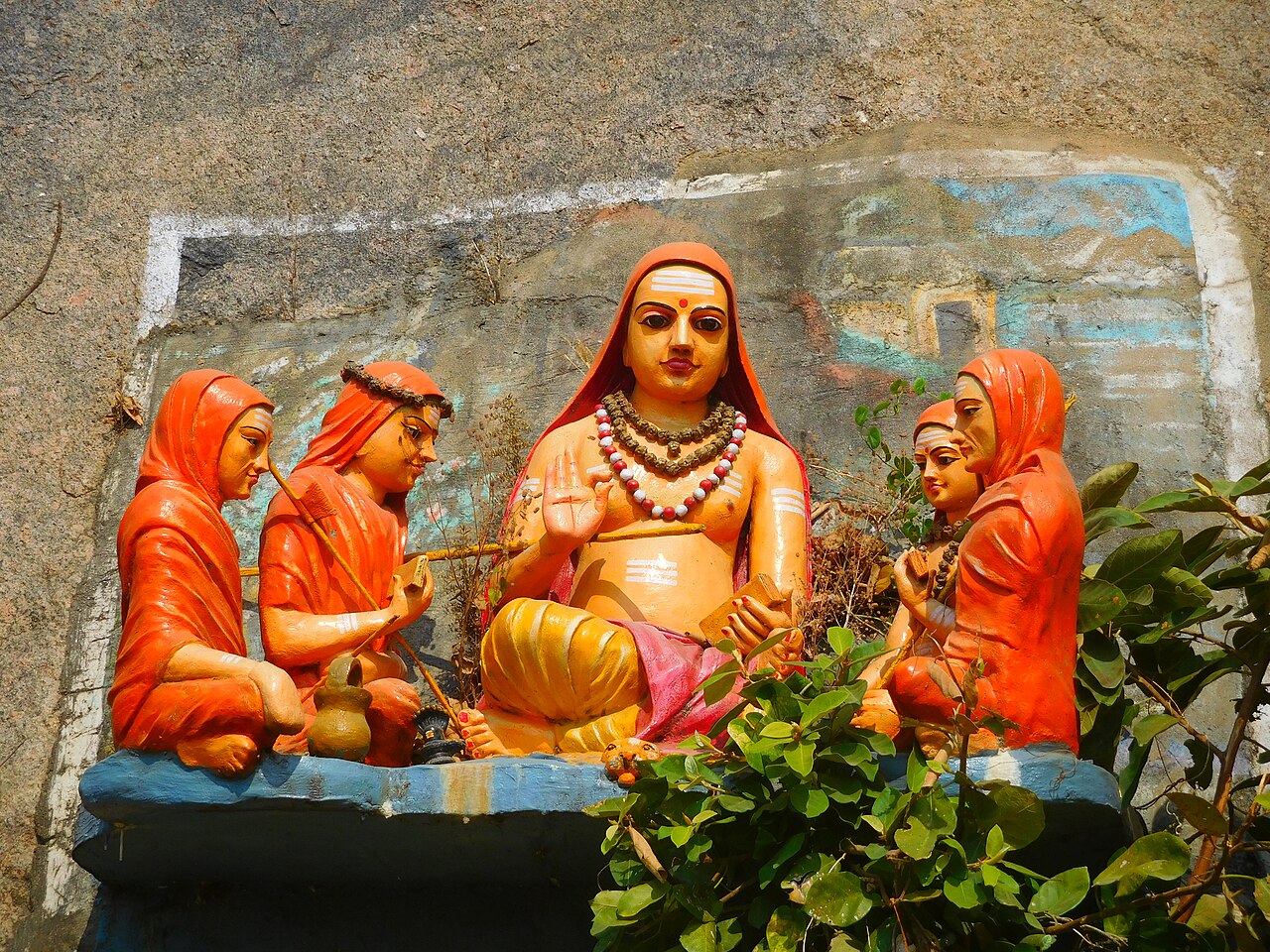
Jagadguru Adi Shankaracharya
Advaita Vedanta
"The philosopher who revived Sanatana Dharma and established Advaita Vedanta"
"The philosopher who revived Sanatana Dharma and established Advaita Vedanta"
Adi Shankaracharya was an 8th-century Indian philosopher and theologian who consolidated the doctrine of Advaita Vedanta. Born in Kaladi, Kerala, he traveled across India establishing four mathas (monasteries) and reviving Hinduism during a period of Buddhist dominance.
Shankara's teachings address the fundamental question of identity: "Who am I?" In an age of anxiety and identity crisis, his teaching that our true Self is infinite consciousness offers profound peace.
His method of negation (Neti Neti - not this, not this) helps us detach from limited identifications with body, mind, and ego. This is relevant for managing stress and finding inner stability.
The concept that multiplicity is appearance while unity is reality has implications for resolving conflicts - whether personal, social, or environmental. Recognizing our essential oneness can transform relationships.
His balanced approach of combining devotion (Bhakti) with knowledge (Jnana) shows that emotion and intellect need not be opposed in spiritual life.
జయంతి/పుట్టినరోజు: Vaishakha Shukla Panchami