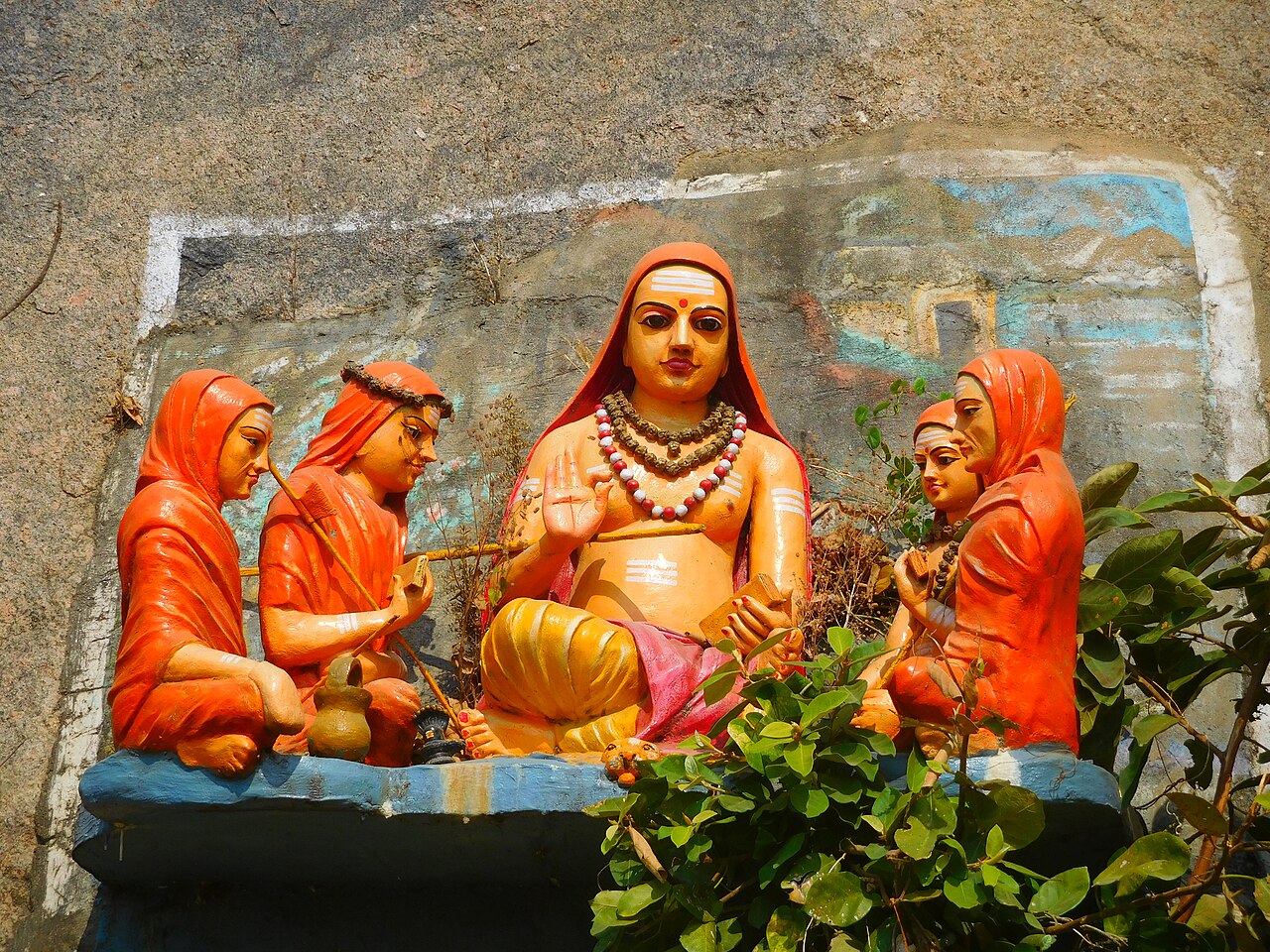
Jagadguru Adi Shankaracharya - Spiritual Master

Jagadguru Adi Shankaracharya

Advaita Vedanta

The philosopher who revived Sanatana Dharma and established Advaita Vedanta

788 CE - 820 CE
Kaladi, Kerala
Advaita Vedanta

Introduction

Adi Shankaracharya was an 8th-century Indian philosopher and theologian who consolidated the doctrine of Advaita Vedanta. Born in Kaladi, Kerala, he traveled across India establishing four mathas (monasteries) and reviving Hinduism during a period of Buddhist dominance.

Life Journey

788 CE
Birth
Born in Kaladi, Kerala to Shivaguru and Aryamba
796 CE
Sannyasa
Renounced worldly life at age 8
800 CE
Met Guru
Became disciple of Govinda Bhagavatpada
805 CE
Debates
Began philosophical debates across India
810 CE
Mathas
Established four mathas at cardinal points
820 CE
Mahasamadhi
Attained samadhi at Kedarnath

Core Teachings

  • Brahman alone is real; the world is an appearance (mithya)
  • The individual self (Atman) is identical with Brahman
  • Liberation (Moksha) comes through knowledge (Jnana), not action alone
  • Maya creates the illusion of multiplicity in the One
  • The scriptures (Shruti) are the primary means of knowledge about Brahman
  • Discrimination between the real and unreal (Viveka) is essential
  • Renunciation (Vairagya) of worldly attachments aids spiritual progress

How to Follow / Practices

  • Study of Vedanta texts with a qualified teacher
  • Self-inquiry (Atma Vichara) to realize one's true nature
  • Meditation on Mahavakyas like "Tat Tvam Asi"
  • Practice of Shama (mental tranquility) and Dama (sense control)
  • Sravana (listening), Manana (reflection), Nididhyasana (meditation)
  • Devotion to a personal deity as a stepping stone to Jnana
  • Service to guru and spiritual community

Famous Works & Speeches

Brahma Sutra Bhashya - Commentary on Vedanta aphorisms
Bhagavad Gita Bhashya - Commentary on the Gita
Vivekachudamani - Crown jewel of discrimination
Atma Bodha - Self-knowledge
Upadesa Sahasri - Thousand teachings
Bhaja Govindam - Devotional hymn
Soundarya Lahari - Wave of beauty (hymn to Devi)

Relevance for Modern Life

Shankara's teachings address the fundamental question of identity: "Who am I?" In an age of anxiety and identity crisis, his teaching that our true Self is infinite consciousness offers profound peace.

His method of negation (Neti Neti - not this, not this) helps us detach from limited identifications with body, mind, and ego. This is relevant for managing stress and finding inner stability.

The concept that multiplicity is appearance while unity is reality has implications for resolving conflicts - whether personal, social, or environmental. Recognizing our essential oneness can transform relationships.

His balanced approach of combining devotion (Bhakti) with knowledge (Jnana) shows that emotion and intellect need not be opposed in spiritual life.

Inspiring Quotes

"Brahma satyam jagat mithya, jivo brahmaiva naparah - Brahman is real, the world is appearance, the individual soul is Brahman alone."
Vivekachudamani
"The world, like a dream, is a product of ignorance."
Brahma Sutra Bhashya

Associated Places & Ashrams

Ashram/Monastery
Dwarka Pitha
Dwarka, Gujarat
Ashram/Monastery
Sringeri Sharada Peetham
Sringeri, Karnataka
Birthplace
Kaladi Temple
Kaladi, Ernakulam District, Kerala
Samadhi/Memorial
Kedarnath Temple
Kedarnath, Uttarakhand

Festivals & Remembrance

Jayanti (Birth Anniversary): Vaishakha Shukla Panchami